7 Smart Tips on How to Dress for Court With Confidence

Dressing for court comes down to one goal: look serious and put-together so nobody is thinking about your clothes. Stick to dark or neutral colors, cover your shoulders and knees, and choose fabrics that hold their shape while you sit and stand for hours. These seven outfits do that, whether you're a witness, a juror, a plaintiff or there to support someone.
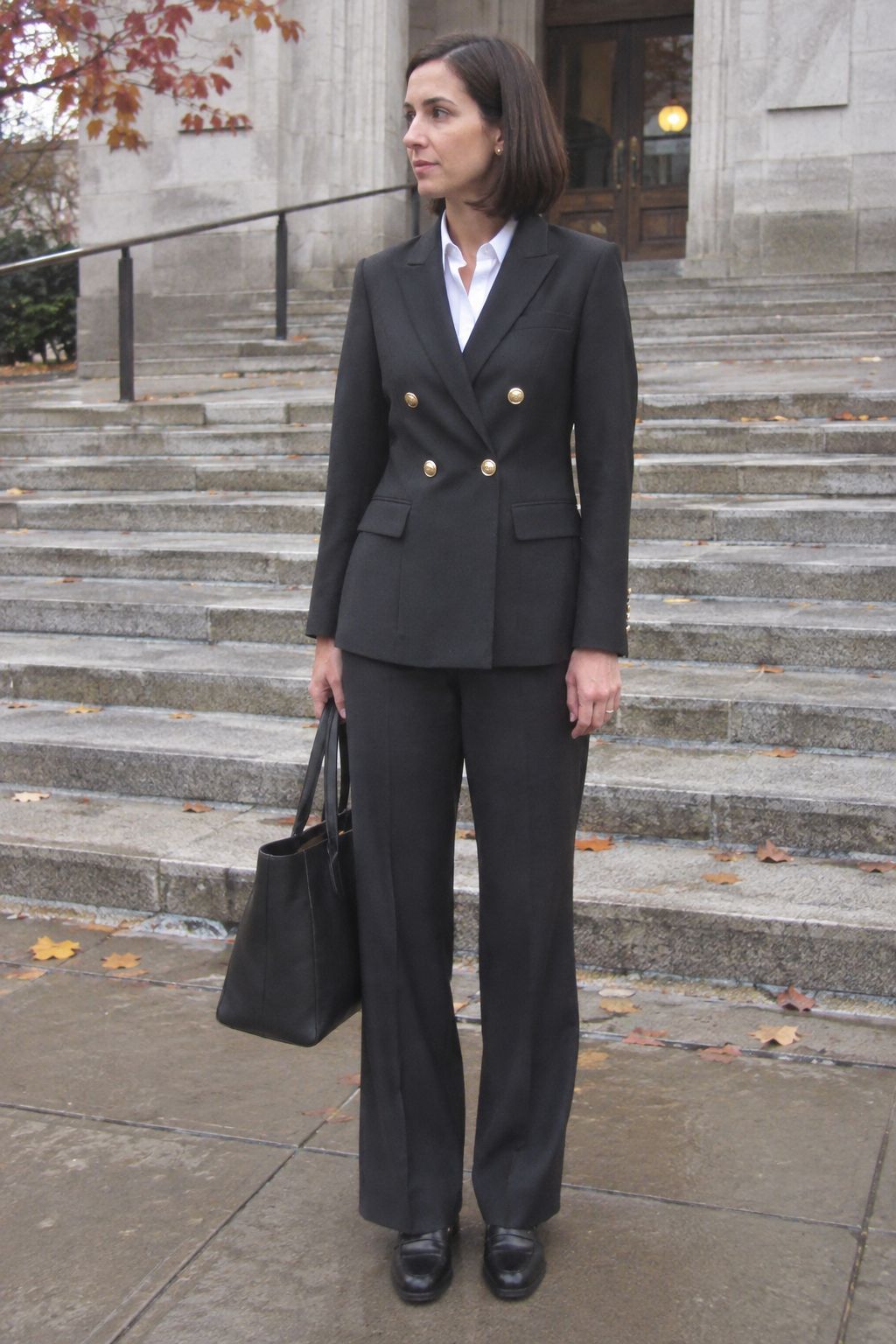
1. The Matching Black Blazer Set
If you want one outfit that settles the question, this is it.
A black double-breasted blazer with matching pants reads as formal the moment you walk in, and you don't have to think about whether the pieces go together.
The double-breasted front gives you structure through the chest, which is useful when you're nervous and want to stand a little taller.
Black is the safest color for a courtroom, and a set means the blazer and pants will always match in tone and fabric.
I like this for witnesses and anyone giving testimony, because it looks like you took the day seriously without looking like you're in costume.
Keep the blazer buttoned when you stand and open it when you sit.
Wear it with: Under the blazer, wear a White Linen Cotton Button-Up Shirt buttoned up to the second button, or a Black Fitted Turtleneck Knit Sweater if the building runs cold.
Add black closed-toe loafers or low block heels, a structured tote, and small stud earrings.
Best for: Testifying as a witness, Hearings, Depositions, Attorney meetings
Shop this set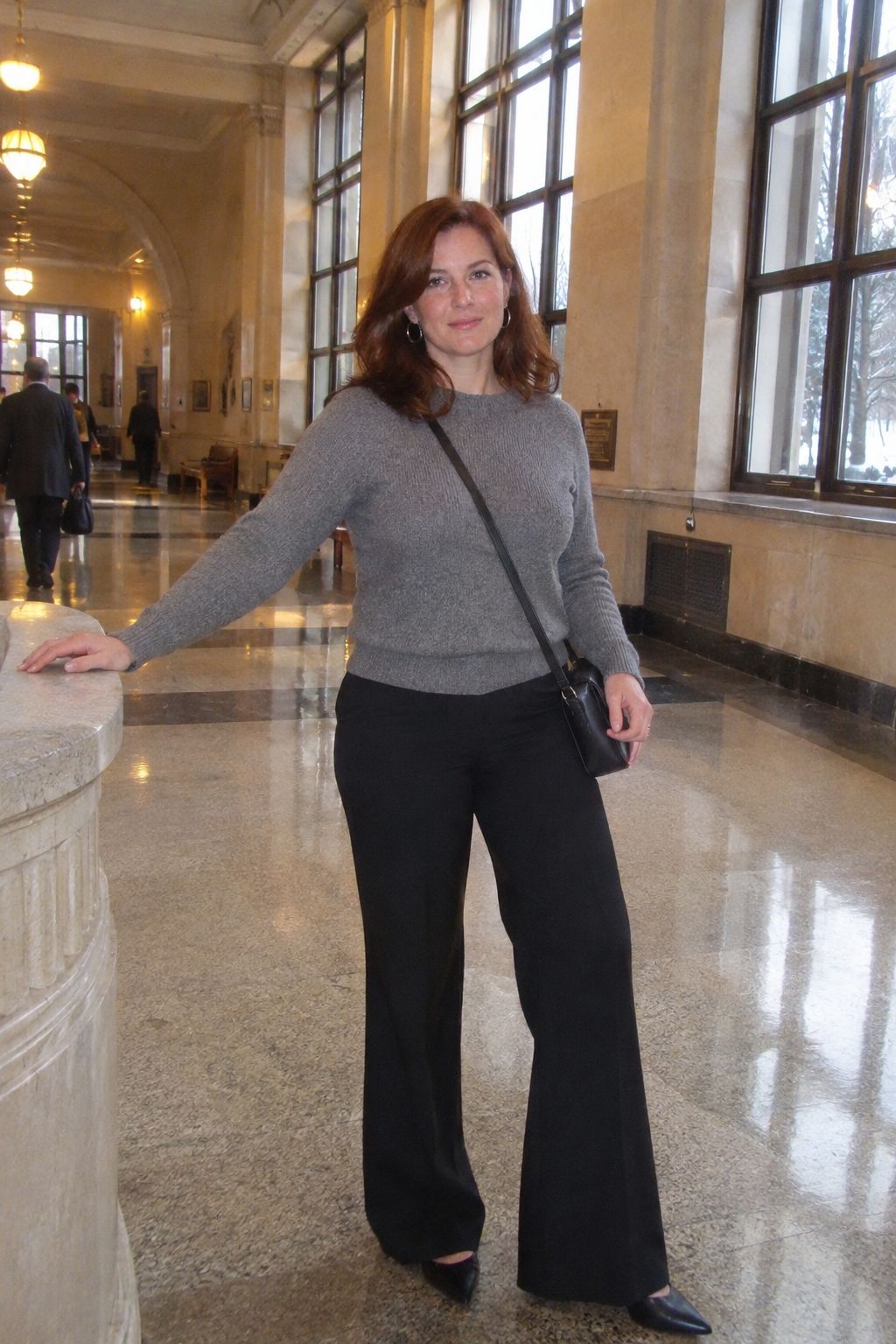
2. Flared Black Pants for a Long Day
Court days run long. You wait in hallways, sit on hard benches and go through security, so comfort matters as much as looks.
These black flared pants have a natural waist, a smooth drape and a fleece lining, which makes them a smart pick for a cold courthouse or a winter morning.
The flare is gentle, enough to look current without being fussy, and the natural waist keeps the shirt tucked and tidy when you sit down.
The drape also means the pants don't cling or ride up. This is a good choice for jurors, who may be in the same clothes for several days in a row.
Wear it with: Tuck in a Gray Ribbed Mock Neck Knit Sweater and add a Gray Embroidered Single-Breasted Work Blazer on top.
Black pointed flats or a low heel that covers the toe will do, with a small black crossbody that fits through the scanner easily.
Best for: Jury duty, Winter court dates, Long waiting days, Family court
Shop these pants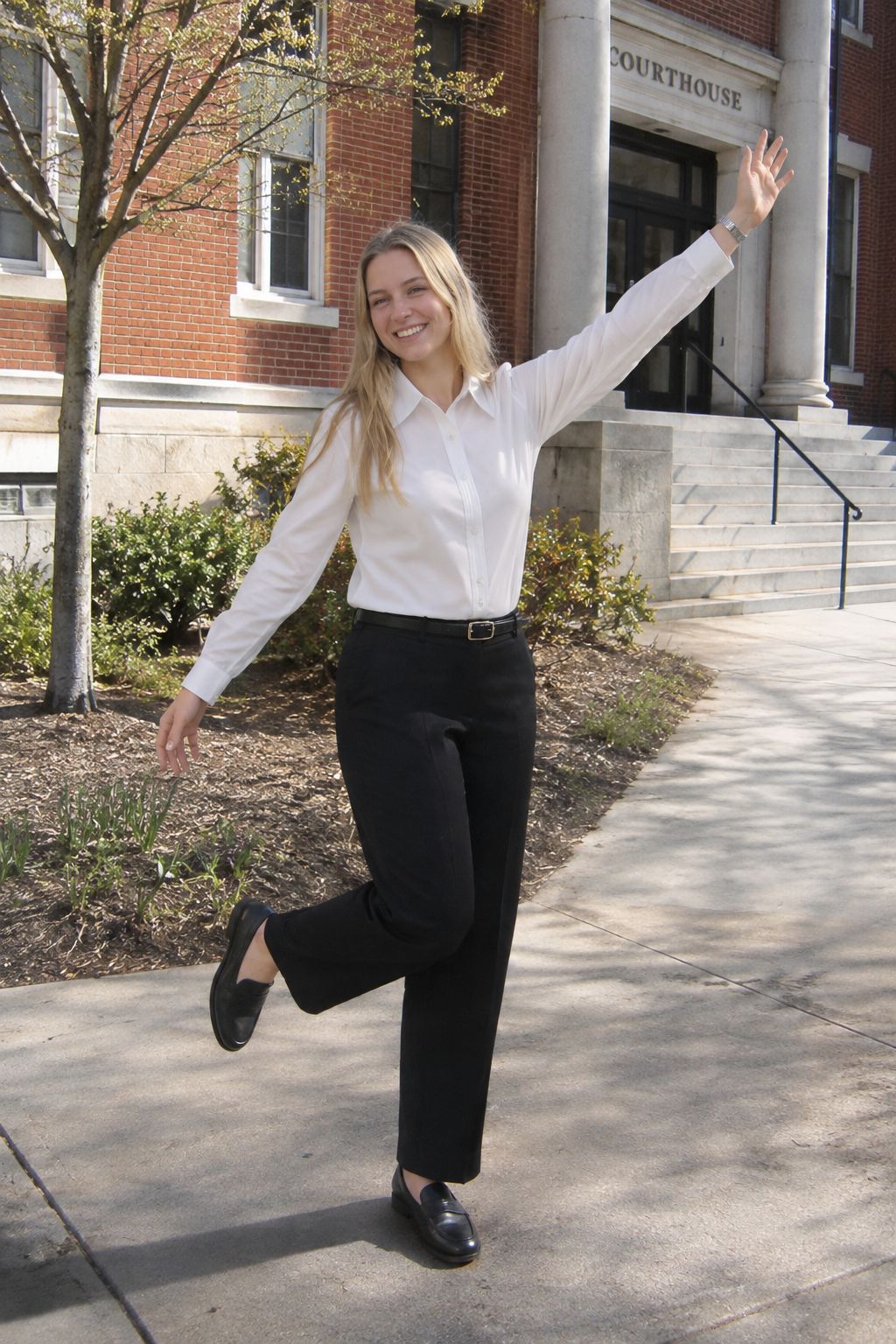
3. A Crisp White Shirt, Done Right
A white button-front shirt is the most reliable court top there is, and the cut matters.
This one has a relaxed fit and pressed pleat details, so it looks sharp without pulling across the shoulders or gaping at the buttons.
That is the difference between looking prepared and spending the morning adjusting your shirt. White photographs and reads as clean and serious, but check it in daylight first, since some shirts turn sheer.
Steam it the night before and hang it, rather than folding it into a bag. Wrinkles show up fast under courtroom lighting.
Wear it with: Tuck it into the Black Straight Leg Work Pants and add a Dark Gray Relaxed Linen Blazer on top for a more formal finish.
Black loafers, a thin leather belt and a classic watch complete the look.
Best for: Hearings, Traffic court, Jury duty, Meeting with your lawyer
Shop this top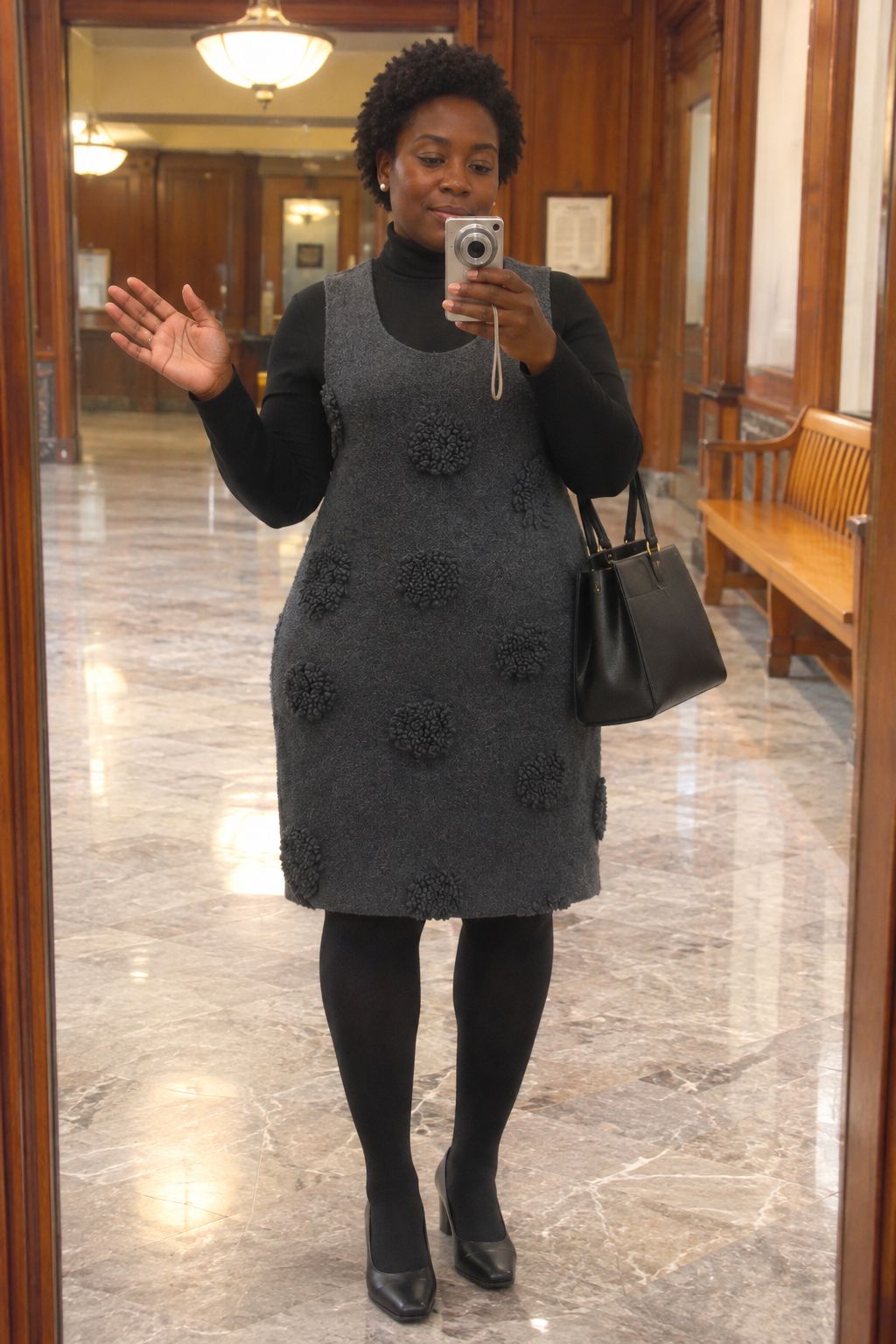
4. Gray Wool Dress With Structure
When you'd rather wear one piece than build an outfit, this sleeveless gray wool-blend dress is a calm, serious choice.
The fabric is soft but structured, the cut skims the body, and the rosette at the bodice gives it a bit of detail without drawing the eye.
Gray is gentler than black and looks very respectable in a courtroom. Because it's sleeveless, it needs a layer. Courts ask you to cover your shoulders, and the rooms are usually cold anyway.
Check the hem too: you want it at or just below the knee when you sit.
Wear it with: Layer a Gray Embroidered Single-Breasted Work Blazer over it, or a Purple Button Knit Cardigan for a softer touch. Add black opaque tights, closed-toe pumps with a low heel and a structured handbag.
Best for: Testifying, Sentencing hearings, Family court, Formal proceedings
Shop this dress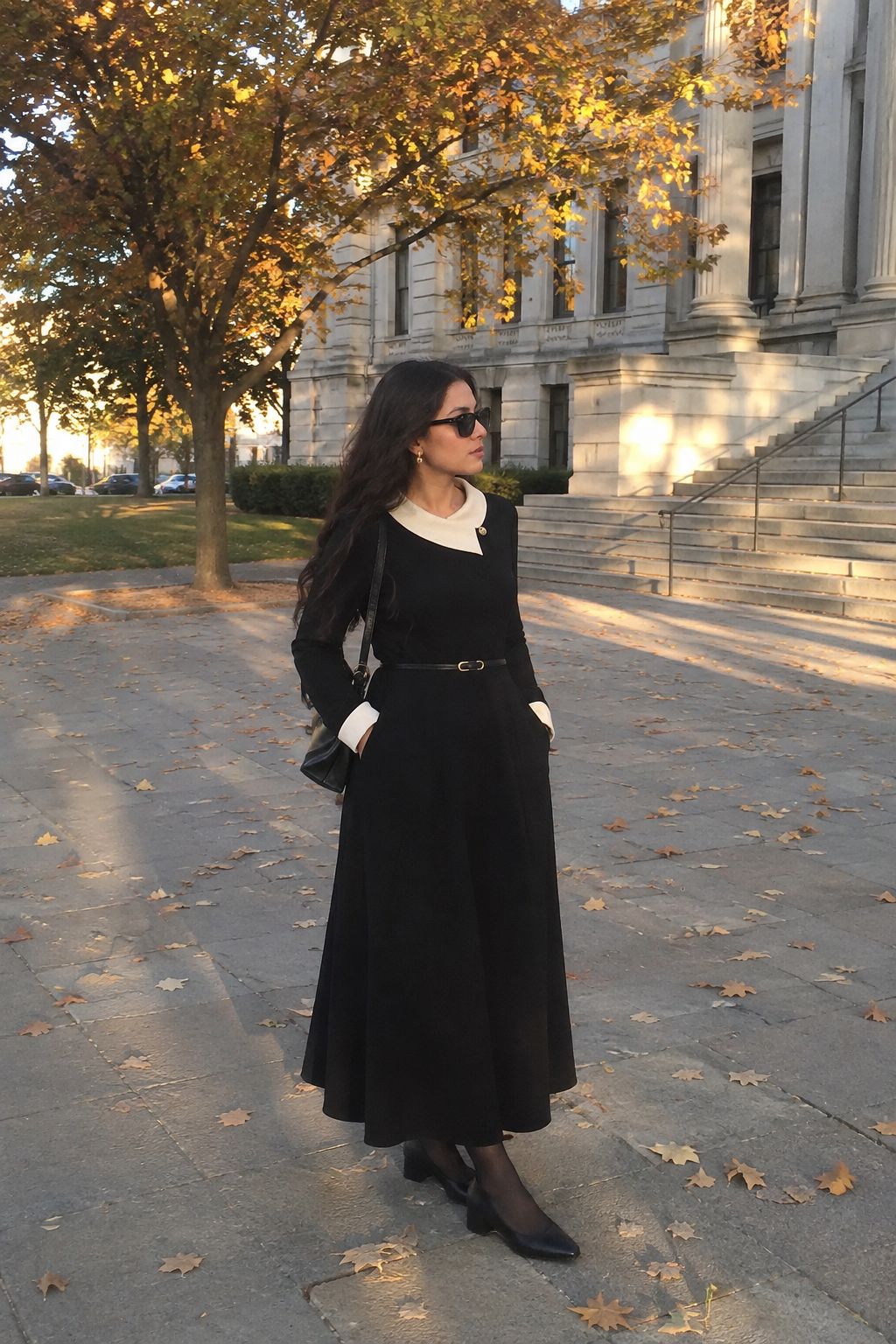
5. Black Midi With a Contrast Collar
This black A-line midi has a diagonal contrast collar, a jacquard texture and a defined waist.
It's the dress to wear when you want to look polished and a little more considered than a plain black sheath.
The texture gives it interest up close, while the overall effect stays quiet and appropriate.
The A-line skirt moves easily when you walk, climb steps or sit for long stretches, and the midi length means you won't be tugging at a hem.
I'd choose it for a day when you're likely to be on the stand or speaking, and want a dress that feels like you.
Wear it with: Keep the top half simple and add a Gray Embroidered Single-Breasted Work Blazer if the room is cold.
Wear sheer black tights, low black block heels and a slim black clutch or small shoulder bag. Skip statement jewelry.
Best for: Testifying, Court appearances, Sentencing, Legal meetings
Shop this dress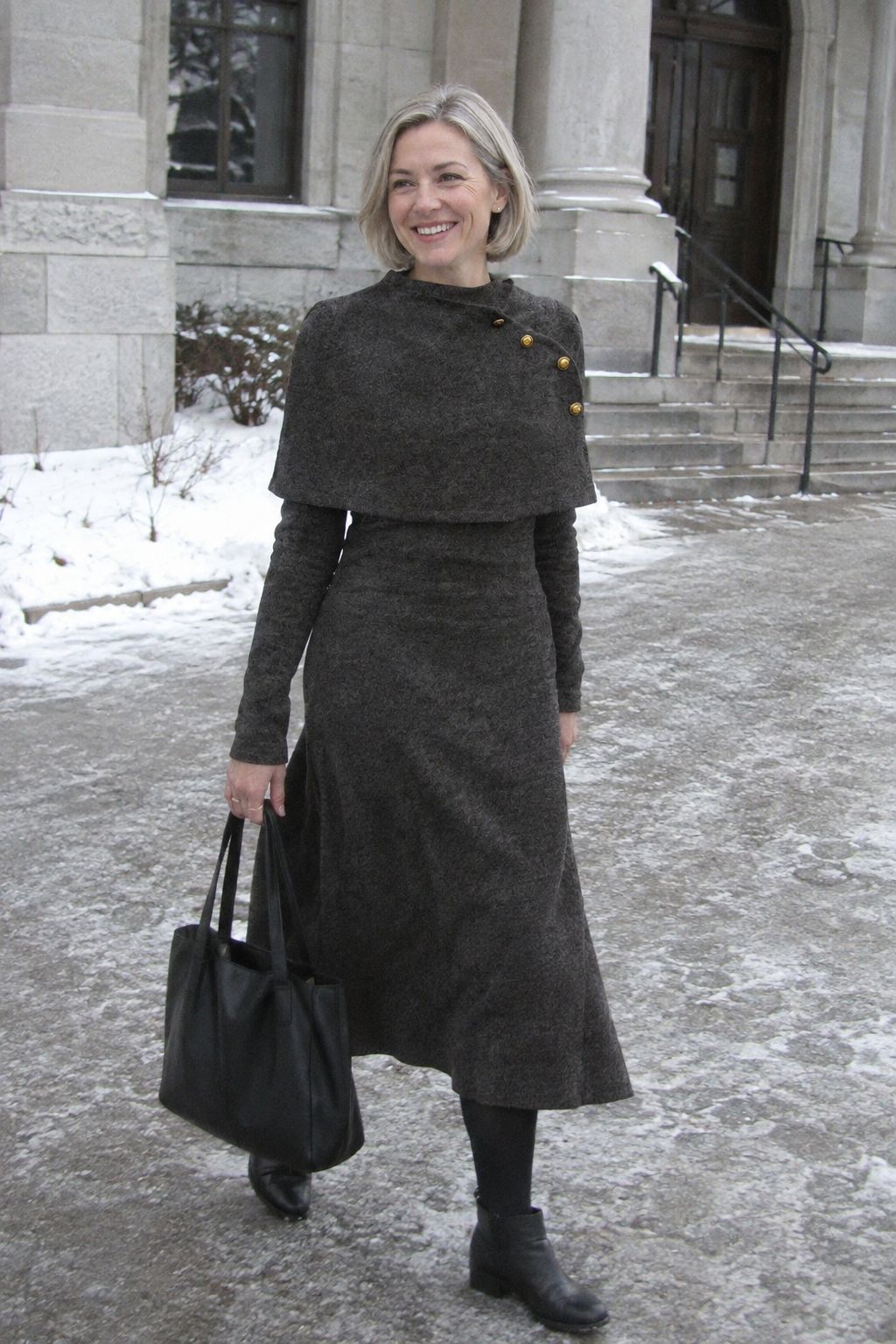
6. The Knit Dress With a Cape Layer
For cold months, this gray knit dress is my favorite way to look formal without feeling stiff.
The layered cape look at the top gives it a polished silhouette, the long sleeves cover your arms, and the flared A-line skirt gives you room to move.
The defined waist keeps it neat rather than shapeless. Knit is forgiving when you're sitting for hours, and gray stays calm and professional.
It is a good choice for a jury summons or a long hearing in an old building where the heating is unpredictable.
Check that the knit isn't clingy, and steam out any creases before you go.
Wear it with: Add black opaque tights and black ankle boots with a low heel, or leather loafers. A Black Fitted Turtleneck Knit Sweater worn underneath adds warmth in a very cold room.
Carry a simple black tote and keep jewelry to small studs.
Best for: Jury duty, Winter hearings, Long court days, Family court
Shop this dress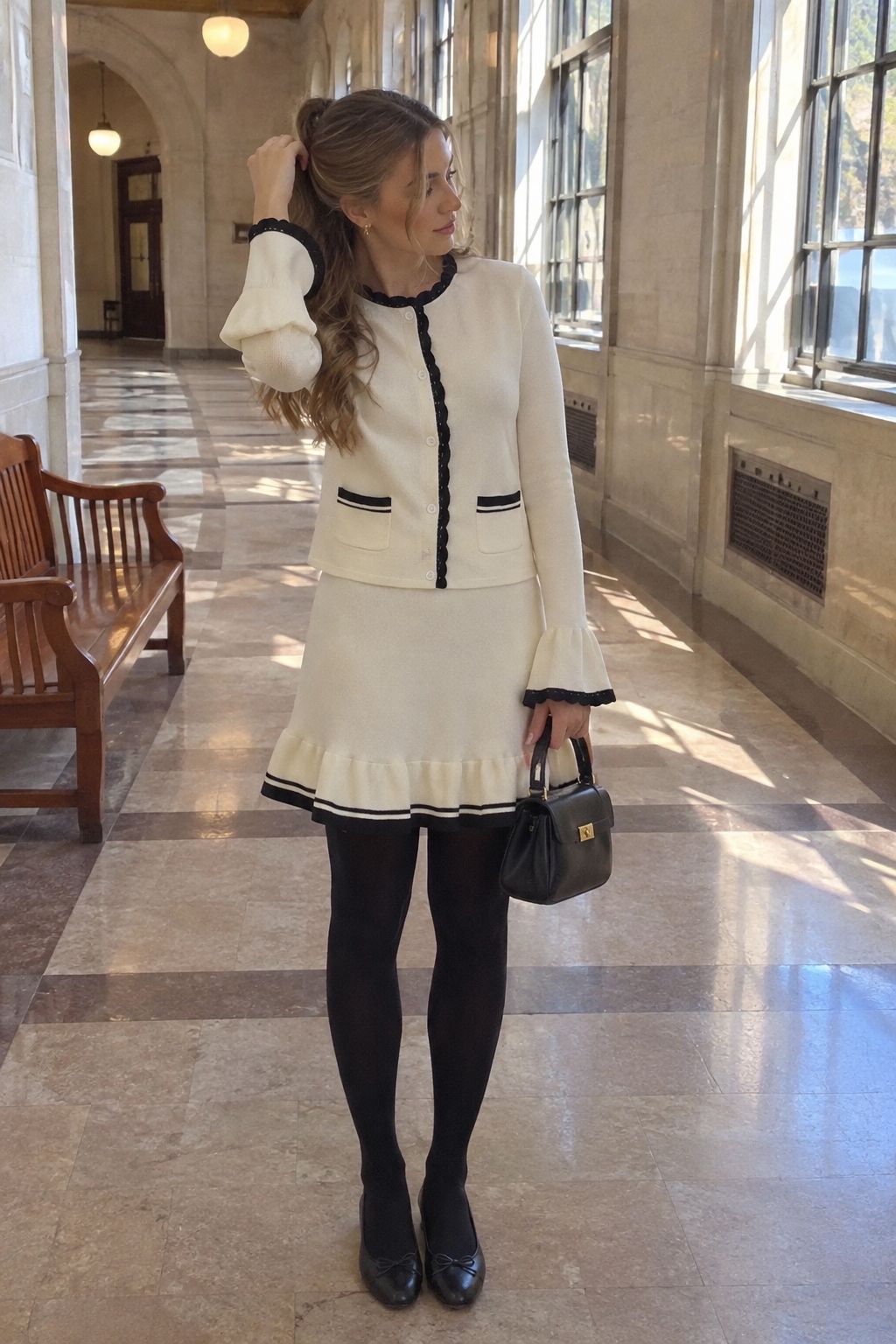
7. A Cream and Black Knit Skirt Set
Court doesn't have to mean all black. This cream knit top and skirt set with black contrast trim and crochet-style edging looks soft and approachable while still being modest and put-together.
It suits a day when you're the one who needs to come across as calm, sincere and respectable, such as a family or small claims matter.
The long sleeves and long skirt cover everything a court expects you to cover, and the matching pieces look intentional.
Cream is lighter than the usual court palette, so keep everything else dark and simple to balance it. Check that the knit isn't see-through in bright light.
Wear it with: Add black opaque tights and black flats or low block heels. Throw a Gray Embroidered Single-Breasted Work Blazer over the top if you want something more formal, or carry a black wool coat.
Keep the bag small and structured.
Best for: Family court, Small claims, Hearings as a plaintiff, Supporting a family member
Shop this setA Few Rules I'd Follow Every Time
Check the court's own dress code before you go. Many courthouses post one online, and some turn people away for tank tops, shorts, hats or graphic tees.
If you can't find one, assume business casual at the very least and lean more formal.
Dress for sitting, standing and security.
Wear shoes you can walk in, a layer for freezing rooms, and nothing with metal that sets off the scanner more than it has to.
Keep your bag small, since you may be carrying it all day.
Do a trial run the day before. Sit down in the outfit, raise your arms, and make sure nothing rides up, gapes or feels tight.
Then pick the outfit you feel calmest in, because looking steady helps you act steady.
FAQ
What should a woman wear to court?
A suit, a blazer with pants or a skirt, or a modest dress with a layer on top are all safe. Stay with black, gray, navy or other neutral colors, and cover your shoulders and knees. Pick something that fits well and doesn't need adjusting.
Can I wear jeans to court?
Most courts prefer you don't, and some do not allow them. Dark, plain jeans might pass in some places, but dress pants or a skirt is the safer choice. If you're unsure, ask the clerk or check the court's website.
What colors should I wear to court?
Black, gray, navy and white are the most common because they look serious and calm. Cream and soft neutrals work too. Avoid bright colors, loud prints and anything that draws attention away from you.
Is a dress okay for court?
Yes, as long as it's modest. Choose a hem at or just below the knee, sleeves or a layer over your shoulders, and a neckline that isn't low. A structured midi with a blazer or cardigan is a solid option.
What shoes should I wear to court?
Closed-toe shoes in black or another dark neutral, such as loafers, flats or low block heels. You'll be walking, waiting and standing, so comfort matters. Skip flip-flops, sneakers and very high heels.
What should I wear to court as a juror?
Business casual works, but comfort counts because you may sit for hours. Wear layers, since courtrooms can be cold, and choose pants or a knit dress that moves easily. Check your summons for any specific rules.
Should I dress up if I'm just a witness or a spectator?
Yes. Everyone in the room is judged on how they present, and a judge notices. Dress as if you were the one on the stand, with neat, modest, neutral clothes.
Can I wear a sleeveless dress to court?
Only with a layer over it. Most courts expect covered shoulders, so add a blazer or cardigan. It also helps in cold rooms, and you can always take it off if it's warm.
More style guides
- What to Wear to Court (9 Smart Looks)
- Court Outfits for Women (7 Professional Combinations)
- What to Wear to a Conference (7 Smart Business Looks)
- What to Wear to an Interview Female (10 Confident Choices)
- What to Wear to Catholic Mass (7 Respectful Outfits)
- What to Wear to a Job Fair (9 Confident Looks)
- What to Wear to Jury Duty (8 Comfortable Outfits)
- 7 Career Day Outfit Ideas to Inspire Young Minds
- 7 Conference Outfits for Women From Keynote to Cocktails
- What to Wear to a Career Fair (7 Confident Looks)